
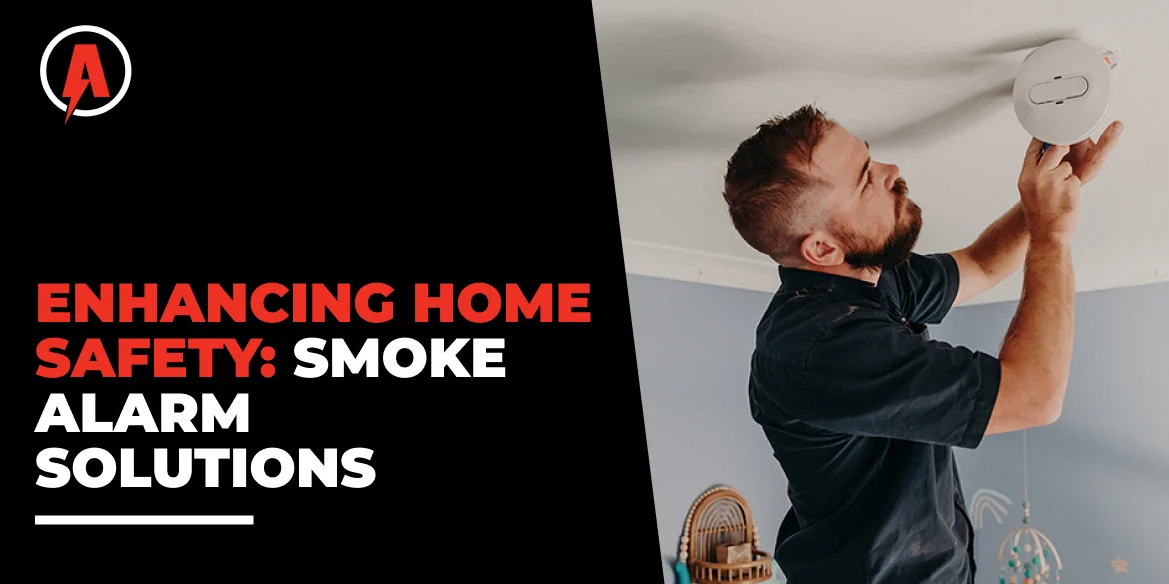
Most older Brisbane homes still have a couple of standalone smoke alarms: one in the hallway, maybe one near the kitchen, each beeping on its own. Interconnected smoke alarms work differently, and from 1 January 2027 every Queensland home needs them. Here’s how they work and what’s changed since the old battery alarm on the ceiling.
The traditional smoke alarm
For decades, the standard was a single battery alarm in the hallway. They’ve saved a lot of lives, but they have limits. Each alarm only sounds where the smoke is. If a fire starts in a back bedroom or the garage, someone asleep at the other end of the house may not hear it until it’s too late. Many older alarms are also the ionisation type, which is slower to react to the smouldering fires that are common at night.
What “interconnected” means
Interconnected alarms are linked together. When one detects smoke, every alarm in the house sounds at once, so everyone hears it no matter which room they’re in. The link is either a wire between the alarms (hardwired) or a radio signal between battery alarms.
Why they’re better
- Everyone gets the warning at the same time. A fire in the rumpus room sets off the alarm outside the kids’ bedrooms too.
- Earlier warning for smouldering fires. Queensland’s rules require photoelectric alarms, which respond better to the slow, smoky fires that start in bedding, couches and wiring.
- Fewer flat-battery chirps. Hardwired alarms run on mains power with a battery backup, so you’re not up a ladder at 2am replacing a 9-volt.
- They last. Smoke alarms need replacing every 10 years. A new interconnected system resets that clock for the whole house at once.
What Queensland now requires
From 1 January 2027 every Queensland home, including owner-occupied homes, needs photoelectric smoke alarms (AS 3786-2014) that are interconnected, in every bedroom, in the hallway outside the bedrooms, and on every storey. Rentals and homes sold since 2022 already had to comply. We’ve set out the full rules for owners, landlords and sellers here: smoke alarm rules in Queensland before 1 January 2027.
Getting them installed
Hardwired smoke alarms are connected to your home’s electrical wiring, so they must be installed by a licensed electrician. Positioning matters too: alarms too close to a kitchen, bathroom or air conditioning vent cause nuisance alarms, and the law sets out where each one has to go.
We install hardwired, interconnected photoelectric alarms across Brisbane’s northside and Moreton Bay, tell you exactly how many your home needs, and give you a certificate when the job’s done. See our smoke alarm installation service or call 1800 230 400.
Armitage Electrical (QLD) Pty Ltd. Electrical Contractor Licence No. 88297.
